The brands outperforming their competitors aren't necessarily spending more. They're spending smarter by running organic and paid from the same data, the same messaging framework, and ideally the same platform. Most teams aren't doing this — not because the tools don't exist, but because they haven't chosen the right one.
This article breaks down the five best platforms for organic-paid alignment in 2026, what makes each one genuinely useful for this purpose, and how to match the right tool to your team's goals and budget.
Key Takeaways
- Aligning organic and paid social produces compounding results: lower CPCs, stronger brand trust, and more efficient ad spend
- The best platforms offer a unified dashboard, side-by-side organic vs. paid analytics, and the ability to boost high-performing organic posts directly into paid campaigns
- Top picks for 2026: Hootsuite, Sprout Social, Meta Business Suite, HubSpot, and Loomly
- Platform choice should reflect team size, primary channels, budget, and whether CRM integration or creative collaboration is the bigger priority
- Even the right platform underperforms without the right strategy — which tools you pick and how well your team executes with them determines whether spend converts
Why Aligning Organic and Paid Social Media Matters in 2026
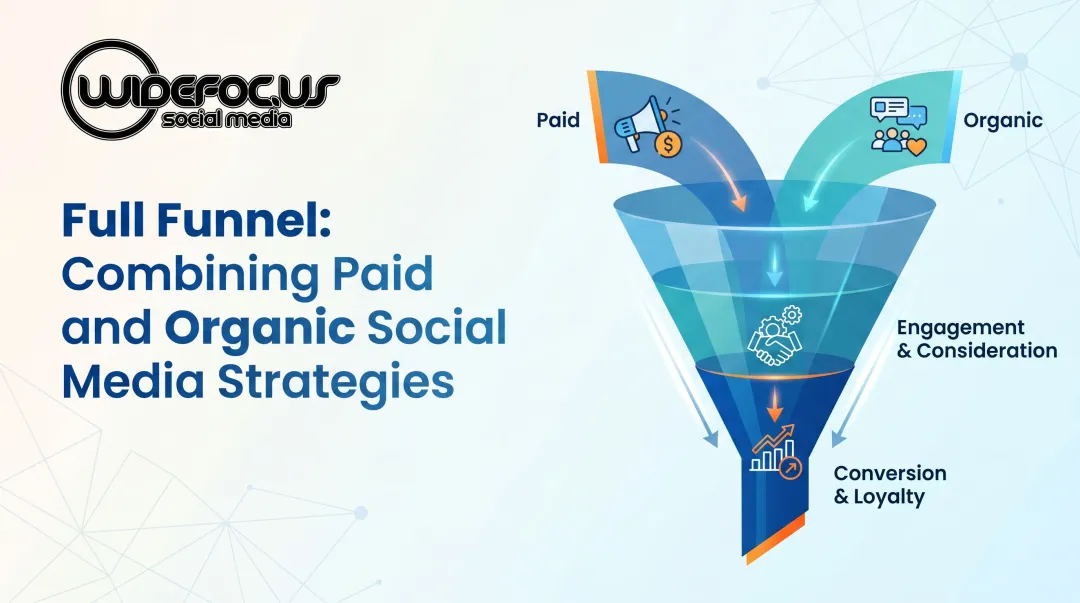
True alignment means organic and paid strategies share the same audience data, consistent brand messaging, and mutual performance insights. Running both channels simultaneously isn't enough — they need to actively inform each other rather than operate as separate functions.
The performance case is straightforward:
- Organic content builds community trust and provides a low-cost testing ground for creative
- Paid amplification scales what's already proven to work, avoiding wasted spend on untested messaging
- When one informs the other, brands stop guessing what to boost and start amplifying with evidence
Research published in the Journal of Digital & Social Media Marketing (2025) confirms that coordinating organic and paid efforts produces measurably stronger audience growth and engagement than siloed approaches.
What the Algorithm Shift Changes
Meta has moved away from a pure follower-based distribution model toward an interest-graph orientation, where relevance and discovery now matter more than follower count. Three signals now drive non-follower reach:
- Saves — indicating content worth returning to
- Shares — signaling relevance beyond the original audience
- Watch time — demonstrating content that holds attention
When organic and paid messaging are misaligned, they create conflicting signals that suppress performance on both sides.
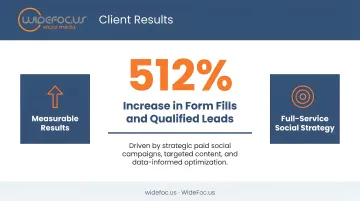
WideFoc.us has seen this dynamic play out directly with clients. For one regional HVAC company, coordinating a consistent organic content strategy with geo-targeted Meta campaigns produced a 512% increase in form fills and 9x qualified leads in eight weeks. For a national window treatment franchise, the integrated approach drove nearly 14,000 website clicks in a single month at an average CPC below $1.00.
The platforms evaluated below are assessed specifically on how well they enable this kind of alignment, covering how effectively each one connects organic and paid into a shared workflow rather than treating them as separate tools.
Best Platforms for Aligning Organic and Paid Social Media in 2026
These platforms were evaluated on their ability to bridge organic content management and paid campaign execution, with particular focus on cross-channel analytics, audience data sharing, and the ability to boost organic content directly into paid ads.
Hootsuite
Hootsuite covers the widest channel range of any platform on this list — scheduling, publishing, paid ad management, analytics, and inbox monitoring across Facebook, Instagram, LinkedIn, TikTok, Pinterest, YouTube, and X from a single dashboard.
Where Hootsuite earns its place here: teams can identify top-performing organic posts and boost them as paid campaigns without leaving the platform. Integrated analytics allow direct side-by-side comparison of organic vs. paid performance, so the loop between content testing and paid spend is closed in one place.
| Attribute | Details |
|---|---|
| Best For | Mid-size to large businesses managing multiple networks with a single team |
| Key Alignment Feature | Boost high-performing organic posts directly to paid from the unified dashboard; organic and paid analytics in one view |
| Pricing | Standard and Advanced self-serve tiers starting around $99/user/month; Enterprise is custom — verify current pricing |
Sprout Social
Sprout is built for marketing agencies and enterprise brands where reporting accuracy is non-negotiable. Its Smart Inbox consolidates organic comments and paid ad interactions into a single stream — no toggling between platforms to manage community responses across campaign types.
Three features set Sprout apart for alignment work:
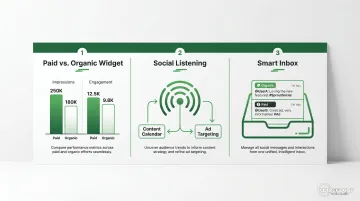
- The Paid vs. Organic widget in the Custom Report Builder compares impressions, engagement, and engagement rate across Facebook, Instagram, and LinkedIn side by side
- Social listening surfaces real-time audience signals that simultaneously shape the organic content calendar and paid ad targeting
- Smart Inbox unifies organic and paid interactions in one stream, eliminating platform-switching during community management
| Attribute | Details |
|---|---|
| Best For | Marketing agencies and enterprise brands where reporting accuracy and cross-channel insights are the top priority |
| Key Alignment Feature | Smart Inbox unifies organic and paid interactions; side-by-side paid vs. organic performance analytics; social listening informs both channels |
| Pricing | Essentials, Standard, Professional, Advanced, and Enterprise (custom) tiers — verify current per-seat pricing on Sprout's site |
Meta Business Suite
Meta Business Suite is free, native, and — for brands focused on Facebook and Instagram — the most frictionless organic-to-paid workflow available. Because it's Meta's own tool, there's no API lag, no third-party sync, and no data gap between what's happening organically and what's available for ad targeting.
Key alignment features unique to this tool:
- Review organic post performance before deciding to run it as a paid ad — no guesswork
- Audience Insights from organic activity feed directly into lookalike audience creation
- Native A/B testing compares creative, text, audience, or placement and determines winners based on cost-per-result
| Attribute | Details |
|---|---|
| Best For | Businesses whose primary audience lives on Facebook and Instagram, especially those with limited budget for third-party tools |
| Key Alignment Feature | Native organic-to-paid promotion flow; organic audience insights feed paid targeting; built-in A/B testing |
| Pricing | Free to use; costs apply only to ad spend |
HubSpot Social Media Management
HubSpot's social media management tool is built differently from every other platform on this list. Rather than treating social as a standalone channel, it connects every social interaction — organic or paid — directly to a contact record in the CRM. This makes it the strongest alignment tool for B2B brands.
When a prospect engages with organic content, that interaction logs to their contact record. When they later convert through a paid retargeting ad, HubSpot traces the full journey. This closed-loop reporting shows exactly how organic and paid each contribute to pipeline — grounding budget allocation in actual revenue data, not platform-level vanity metrics.
| Attribute | Details |
|---|---|
| Best For | B2B businesses and brands already using HubSpot for CRM, email, or marketing automation |
| Key Alignment Feature | Every organic and paid social interaction logs against CRM contact records; full pipeline attribution across both channels; integrates with Facebook Ads and Google Ads |
| Pricing | Free, Starter, Professional, and Enterprise tiers — verify current pricing |
Loomly
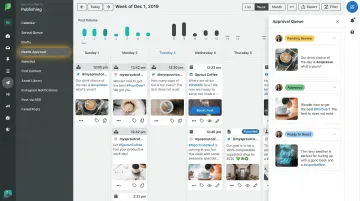
Loomly is built for marketing teams where multiple people review and approve content before it publishes. Its approval workflows keep organic content managers and paid advertising specialists working from the same playbook — a practical solution for teams where messaging drifts between channels.
Once an organic post is created and approved in Loomly, teams can promote it directly as a paid Facebook or Instagram ad within the platform using the Post Sponsoring feature. No rebuilding creative from scratch, no switching tools. The Post Ideas engine also surfaces content suggestions based on trending topics and past performance, helping teams identify which content is worth amplifying before it's even published.
| Attribute | Details |
|---|---|
| Best For | Marketing teams where multiple people manage organic and paid, and brand consistency across both channels is a top priority |
| Key Alignment Feature | Direct organic-to-paid promotion from a single workflow; approval workflows ensure consistent messaging before publishing or boosting; Post Ideas engine surfaces content worth amplifying |
| Pricing | Starter at $65/month (or $49/month billed annually); Beyond at $332/month (or $249/month annually); Enterprise is custom |
How We Chose the Best Platforms for Organic-Paid Alignment
Platforms were assessed specifically on their ability to bridge organic and paid social — not on general scheduling features or name recognition alone. The most common mistake brands make is selecting a tool based on interface design without verifying whether it actually enables cross-channel data sharing.
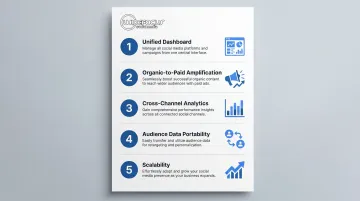
The five criteria used for evaluation:
- Unified dashboard covering both organic publishing and paid campaign management
- Organic-to-paid amplification — the ability to identify and boost high-performing organic posts without leaving the platform
- Cross-channel analytics comparing organic vs. paid performance side by side
- Audience data portability between organic insights and paid targeting
- Scalability matching team size and campaign complexity
Pricing and accessibility also matter. The right platform for a solo marketer managing a single brand looks nothing like the right platform for an agency running campaigns across 20 client accounts. Loomly's Starter plan at $49/month serves the former; Sprout Social's enterprise tier serves the latter.
Platform choice, though, is only part of the equation. For most brands, the deeper issue is strategy and execution — having organic and paid teams operating from separate playbooks regardless of which tool they share. WideFoc.us manages both organic content and paid campaigns under one integrated strategy for B2B and B2C clients, closing that coordination gap at the team level rather than patching it with software.
Conclusion
Treating organic and paid social as separate functions is a performance liability in 2026. The cost of disjointed strategies shows up in inflated CPCs, inconsistent brand messaging, and paid budgets spent on creative that was never pressure-tested with a real audience.
When evaluating platforms, match the tool to your actual constraints — team size, primary channels, analytics needs, and whether CRM integration or creative workflow is the bigger bottleneck. The best platform for alignment is the one your whole team will actually use consistently.
The right platform gets organic and paid into the same room. What happens next depends on the strategy running them. WideFoc.us works with B2B and B2C brands on both — from content creation and community management to paid campaign execution across Meta, LinkedIn, TikTok, and Pinterest — keeping organic and paid aimed at the same measurable goals. Reach out to start the conversation.
Frequently Asked Questions
Which platform supports both organic and paid campaigns?
Hootsuite, Sprout Social, Meta Business Suite, HubSpot, and Loomly all natively support both functions. The best choice depends on your primary channels, team size, and budget — Meta Business Suite is the strongest free option for Facebook/Instagram, while HubSpot is the top pick for B2B brands with CRM needs.
What is the most strategic way to coordinate paid and organic social media to acquire customers?
Use organic content as a testing ground — identify posts with strong engagement rates, saves, and shares, then amplify them with paid spend. Feed paid campaign data (audience demographics, best-performing copy) back into future organic content planning, so each channel sharpens the other over time.
What's the difference between boosting a post and running a full paid campaign?
Boosting is a simplified, one-click promotion of existing organic content with limited targeting options. A full paid campaign involves custom creative, detailed audience segmentation, bidding strategy, and conversion tracking. Both have a role in an aligned strategy — boosting works well for proven organic content, while full campaigns suit precise acquisition goals.
How do I know when organic content is ready to be amplified with paid spend?
Look for three signals before putting budget behind a post:
- Above-average organic engagement (strong engagement rate, saves, or shares)
- Messaging that aligns with a current business goal
- A clearly definable paid audience based on who engaged organically
Can small businesses use these platforms effectively without a large ad budget?
Yes. Meta Business Suite is free, and Loomly's Starter plan is $49/month — both are accessible for small teams. Even a modest paid budget amplifying proven organic content produces better ROI than a large budget spent on untested creative.
Do I need separate tools for organic and paid social, or can one platform handle both?
The platforms in this article are specifically built to handle both in one place. Using a single unified platform keeps your data in one place, improves messaging consistency, and makes it easier to measure the combined impact of both channels without manual reconciliation across multiple dashboards.