Introduction
You've committed to social media. You're posting regularly — maybe even daily. But three months in, engagement is flat, leads haven't moved, and you can't point to a single post that drove a real business outcome. Sound familiar?
This is what happens when social media runs on autopilot — activity without direction. Without a strategy connecting content to measurable goals, you're burning time and budget on posts that disappear into the feed.
According to the 2025 Sprout Social Index, 81% of consumers say social media content influences their purchasing decisions multiple times per year. That influence doesn't reach brands posting without a clear strategy behind each piece of content.
This guide covers what separates effective agency social media management from the rest: how to build strategies tailored to your business, create content that actually performs, choose the right platforms, and measure what matters.
Key Takeaways
- Effective social media management starts with a documented, goal-specific strategy — not recycled templates or reactive guesswork.
- Platform focus beats platform breadth every time; concentrate on 1–3 channels where your audience actually lives.
- A content calendar is the operational backbone of consistency — without it, posting becomes reactive and random.
- Vanity metrics like likes and follower counts don't pay bills; track engagement rate, click-through performance, leads, and actual conversions.
- Strong agency partnerships run on data-informed decisions, transparent reporting, and a willingness to keep iterating.
Why Strategic Agency Social Media Management Matters
The Real Cost of "Post and Pray"
Most businesses don't struggle with doing social media — they struggle with doing it strategically. There's a meaningful difference between posting to fill a schedule and building a system where every piece of content connects to a business outcome.
Facebook organic reach has collapsed from roughly 16% in 2012 to an estimated 1–2% today — meaning a page with 10,000 followers might reach fewer than 200 people per post organically. Simultaneously, Buffer's analysis of 52 million posts found Instagram engagement fell 26% year-over-year, TikTok interactions dropped 32%, and LinkedIn dipped 5% — all while brands posted more content, not less.
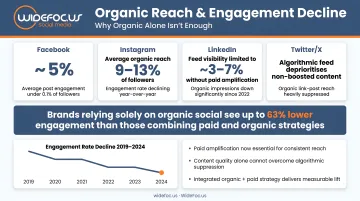
The data points to one conclusion: posting more isn't the fix. Posting smarter is.
Why Businesses Struggle Managing Social Media Alone
Three compounding challenges make solo social media management genuinely hard:
- Algorithm volatility — Platform rules shift constantly, and what worked last quarter may be penalized today
- Platform fragmentation — The average user is active on more than six platforms monthly, making "be everywhere" strategies unsustainable
- Content fatigue — Over 80% of consumers believe AI-generated content is contributing to feed saturation, raising the bar for original, authentic content
- No dedicated strategy — Without documented goals and frameworks, social media stays reactive instead of purposeful
Together, these pressures create a workload most in-house teams can't sustain alongside their core responsibilities. A dedicated agency brings what's typically missing: documented frameworks, dedicated strategists, and the cross-platform tools to stay ahead of platform changes rather than react to them.
Building a Tailored Social Media Strategy
Start With SMART Goals, Not Platforms
Before selecting a single platform or drafting a single post, define what success actually looks like. SMART goals (Specific, Measurable, Achievable, Relevant, Time-bound) give every piece of content a job to do.
Compare these two goals:
- ❌ "Grow brand awareness on LinkedIn"
- ✅ "Increase LinkedIn engagement rate by 25% in Q2 by publishing three thought leadership posts per week"
The second version is trackable, time-bound, and tied to a specific tactic. Each goal should also map to a funnel stage:
| Funnel Stage | Goal Type | Example KPI |
|---|---|---|
| Awareness | Reach new audiences | Impressions, reach |
| Consideration | Build trust and engagement | Engagement rate, shares |
| Conversion | Drive action | Leads, CTR, form fills |
The Brand Audit: Non-Negotiable First Step
No strategy should begin without understanding the current state. WideFoc.us's discovery process illustrates what this looks like in practice — the agency conducts a comprehensive social media audit alongside competitive analysis and a brand SWOT assessment before any content planning begins. The core questions they ask: Who do you want to reach? What do you want them to do? What pain points does your brand resolve?
This audit identifies content gaps, reveals what competitors are doing well, and shows what the target audience already responds to. Skip it, and any strategy is built on assumptions rather than evidence.
Strategy Must Match Business Type
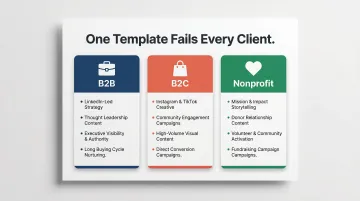
What the audit reveals shapes everything downstream — and the most important thing it shapes is which approach actually fits the client. A single template fails every client type simultaneously:
- B2B companies need LinkedIn-led thought leadership, executive visibility, and lead-nurturing content aligned with longer buying cycles
- B2C brands need scroll-stopping creative, community engagement, and conversion-driven campaigns on Instagram, TikTok, and Facebook
- Nonprofits need mission storytelling, donor engagement content, and fundraising campaign support tied to sign-up and donation conversions
WideFoc.us, which has built customized strategies for B2B and B2C clients since 2007, generated over 20 million impressions and 1 million link clicks in 2024 through this tailored approach. Those numbers reflect campaigns built around client-specific goals, not recycled templates.
Build Around Content Pillars
Rather than asking "what do we post today?", a content pillar framework answers that question in advance. Typically 3–5 recurring themes anchored in brand values and audience needs, pillars create a repeatable creative structure. Common examples: educational content, behind-the-scenes, social proof, industry news, and promotional posts.
Research on B2B content marketing shows 60% of the most successful B2B content marketers use a documented strategy, versus just 21% of the least successful. The pillar framework is how that documentation becomes actionable.
Content Creation, Planning, and Consistency
The Content Calendar as Operational Infrastructure
A content calendar is the operational backbone of effective social media management. It prevents reactive posting, enables advance planning around campaigns and key dates, and gives everyone on the team clear visibility into what's coming.
An effective calendar includes:
- Posting frequency per platform
- Content themes tied to pillars
- Format by post (video, carousel, image, link)
- Assigned responsibilities
- Review and approval checkpoints
Without this structure, content becomes inconsistent — and consistency matters more than most teams realize. Buffer's analysis of 100,000+ users found that regular posting generates 5x more engagement than sporadic activity.
Match Format to Platform
Content shouldn't be copy-pasted across channels — it should be adapted to match what each platform rewards:
- Instagram/TikTok — Short-form video and Reels for reach and discovery
- LinkedIn — Carousel posts and thought leadership articles (carousels generate approximately 3x more engagement than standard posts)
- Facebook — Community-focused content, events, and local targeting
- Pinterest — High-quality visual content for lifestyle and product discovery
Scheduling tools handle distribution, but they can't handle a comment thread. WideFoc.us monitors client channels in real time so that brands stay responsive — joining conversations, answering questions, and keeping engagement active between posts.
Quality Over Quantity: The Data Is Clear
83% of marketers say quality beats quantity — even when that means posting less often. TikTok data makes this concrete: brands increased posting frequency by 22% between 2024 and 2025, yet average interactions per post dropped 32%.
More posts didn't produce more results. Fewer, better posts did. That's the consistent pattern across platforms, and it's what the data keeps confirming.
Balancing Original and Curated Content
Original content builds authority. Curated content — relevant industry news, partner insights, third-party resources — adds variety and positions the brand as a knowledgeable resource rather than a brand focused solely on self-promotion.
The widely-used 80/20 framework offers a practical starting point: 80% of content should deliver value to the audience (education, inspiration, entertainment), while 20% can directly promote the business. The exact ratio shifts based on business type and audience behavior, but the underlying principle holds across most strategies.
Smart Audience Targeting, Platform Selection, and Brand Voice
Focus Beats Breadth
The pressure to be everywhere is real — but spreading thin across six platforms with limited resources compounds the engagement problem rather than solving it.
Concentrate on 1–3 platforms where your target audience is most active:
- LinkedIn → B2B, decision-makers, thought leadership; accounts for 80% of all B2B social leads
- Instagram/TikTok → B2C lifestyle brands, consumer acquisition, product discovery
- Facebook → Local businesses, nonprofits, community engagement, broad consumer reach
- YouTube → Educational content, long-form video, full-funnel strategy
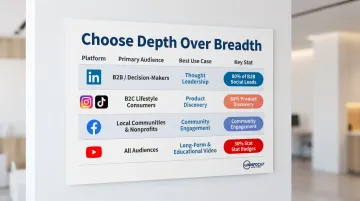
The engagement data supports this focus. Active comment engagement drives +30% engagement on LinkedIn and +21% on Instagram — returns you can only capture if you're deeply present, not thinly spread.
Audience Segmentation Before Targeting
Platform analytics reveal who your audience actually is versus who you think it is. Facebook Insights, LinkedIn Analytics, and Instagram Analytics all surface the data that shapes real decisions — posting schedules, caption tone, ad targeting, and content format.
WideFoc.us applies this in practice: for a DTC supplement client, the agency partnered with a data provider to tap into purchasing behaviors of 220 million American consumers, building custom audiences based on prior supplement purchases. The result: over 1 million impressions in the first month at just $0.45 cost-per-click.
Brand Voice Consistency Across Platforms
Knowing your audience shapes not just where you show up, but how. Tone, values, and messaging principles should stay consistent across platforms — even as the format shifts from a LinkedIn article to an Instagram Reel.
Lucidpress research found consistent branding can increase revenue by 10–20%, yet 77% of companies currently deal with off-brand content production. Agencies close that gap through documentation, team training, and structured content review — enforcing brand standards at a scale most in-house teams can't maintain alone.
A WideFoc.us client captured it well: "Their ability to quickly match our brand voice and style while staying consistent was impressive — and our content needed to be technical and accurate."
Measuring Performance with Analytics and KPIs That Drive Results
Move Past Vanity Metrics
Likes and follower counts feel good. They rarely connect to revenue. The right KPIs depend on what stage of the funnel you're measuring:
| Goal | Metrics That Matter |
|---|---|
| Awareness | Reach, impressions |
| Engagement | Comments, shares, saves, engagement rate |
| Conversion | CTR, leads, cost-per-lead, ROAS, sales attributed to social |
65% of business leaders want direct connections between social campaigns and business goals — yet 68% of teams still rely on engagement metrics to define ROI. That gap is exactly where agency expertise pays off.
Build Tracking Infrastructure Before Launch
Configure UTM parameters, conversion pixels, and Google Analytics integration before a campaign goes live — not after. Every click, form fill, and conversion that occurs before tracking is in place is data you'll never recover.
WideFoc.us includes advanced Facebook Pixel implementation and monthly Google Analytics reporting as standard components of their paid campaign management, ensuring attribution is captured from day one.
Regular Performance Reviews Drive Iteration
Monthly reviews — not quarterly, and certainly not annual — are the mechanism that turns data into decisions. WideFoc.us structures these sessions to cover:
- Which content types are driving the best engagement per platform
- How paid campaigns are performing against CTR, cost-per-lead, and ROAS benchmarks
- What strategy adjustments to make based on results, not assumptions
- Forward planning for upcoming campaigns and content themes
This cadence keeps social media from stagnating — each month's data informs the next month's strategy.
Social Listening as a Competitive Advantage
Your own channel analytics only show part of the picture. Social listening fills the gaps — tracking brand mentions, competitor activity, emerging trends, and audience sentiment in real time.
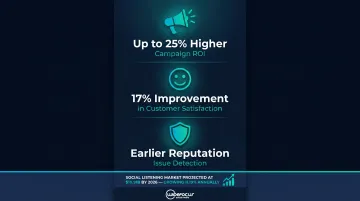
The social listening market is projected to reach $10.91 billion by 2026 and is growing at 11.19% annually — a signal of how seriously brands are taking real-time intelligence. Brands using it report measurable gains:
- Up to 25% higher campaign ROI
- 17% improvement in customer satisfaction
- Earlier identification of reputation issues before they escalate
WideFoc.us incorporates real-time monitoring as a core service component — including proactive reputation management and early identification of issues before they escalate.
Frequently Asked Questions
How do businesses create a social media marketing strategy?
Start by defining SMART goals tied to specific funnel stages, then research your target audience and identify the platforms where they're most active. Build a content plan aligned with those goals, and establish KPI tracking infrastructure before you begin publishing.
How to create effective social media content?
Effective content starts with understanding what your audience needs, then adapts format and tone to each platform's strengths. Balance educational and promotional posts, and end every piece with a clear call-to-action that tells readers exactly what to do next.
How profitable is social media marketing?
The standard industry baseline is a 3:1 return on investment, with strong paid campaigns hitting 5:1. Profitability depends heavily on strategy quality and attribution infrastructure. Without defined goals and proper tracking, results vary widely and are difficult to prove.
What are the 5 C's of content marketing?
The 5 C's are a practitioner framework for audience-centered content: Content, Context, Connection, Community, and Conversion. Each stage moves the audience from consuming relevant material to taking meaningful action.
What does a social media agency actually do for clients?
A full-service agency like WideFoc.us builds customized strategies, creates and schedules content, manages community engagement, runs paid campaigns, and delivers monthly performance reporting. Clients get end-to-end execution without building an in-house team.
How often should businesses post on social media?
Posting frequency should match platform norms and available content quality — not an arbitrary daily quota. Three high-quality posts per week on Instagram consistently outperforms daily low-effort content, and consistency over time matters more than volume in any given week.