Introduction
Athletes are among the most followed people on social media — yet most confuse a large follower count with a genuine community. They're not the same thing.
An audience watches. A community participates. As community practitioner David Spinks puts it: "A key difference is that in a community, people are contributing, not just listening."
That distinction matters for athletes because the metrics that actually drive sponsorship value, fan loyalty, and long-term brand equity come from community depth, not follower volume.
The numbers back this up. According to Opendorse's analysis of 36,000+ branded Instagram posts, athlete accounts achieve a 3.9% average engagement rate compared to just 1.2% for team accounts and 1.0% for league accounts. Broadcast reach produces followers; connection produces engagement.
This guide walks through exactly how to build an athlete community from the ground up: the steps, the requirements, the variables that drive growth, and the mistakes that quietly kill communities before they gain momentum.
Key Takeaways
- Define your community identity first — who the athlete is beyond their sport, and what values connect them to their audience.
- Pick one primary platform based on where your audience already lives, not where trends point.
- Authentic content — training clips, personal stories, unscripted moments — outperforms polished promotional posts every time.
- Two-way engagement turns followers into community members; responding, asking questions, and featuring fans makes it real.
- Measure community health by engagement rate, comment sentiment, and repeat interaction — not follower count.
How to Build an Athlete Community on Social Media
Step 1: Define Your Community Identity and Choose Your Primary Platform
Before posting anything, an athlete needs to answer three questions:
- Who am I beyond my sport? Values, personality, causes, and interests outside competition.
- Who is my ideal community member? Demographics, motivations, what they're looking for from this relationship.
- What shared purpose brings us together? The thread that connects the athlete's identity to the audience's interests.
Without clear answers here, content becomes random and the community never coheres around anything meaningful.
Platform selection follows identity, not popularity. Match your audience demographics to platform behavior:
| Platform | Best For |
|---|---|
| Visual storytelling, 25–40 age range, broad sports audiences | |
| TikTok | Discovery, Gen Z fans, high-energy sports content |
| YouTube | Long-form storytelling, cross-generational reach |
| Older fans, parents, established fan club communities | |
| Strava | Endurance sports (running, cycling) — activity-based community |
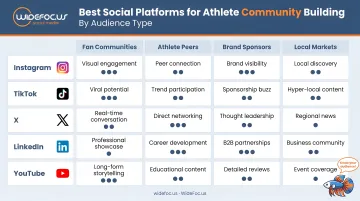
TikTok's sports audience is substantial: 57% of US TikTok users engage with sports content weekly, and sports teams rank among the top-performing industries on the platform at a 3.10% engagement rate.
One platform done well beats five platforms done poorly. Audit where your audience already exists organically before defaulting to the most popular option.
Step 2: Build a Content Pillar Framework
Random posting is the fastest way to stall community growth. A content pillar framework gives posting purpose and prevents the athlete's feed from becoming a highlight reel that only comes alive on game day.
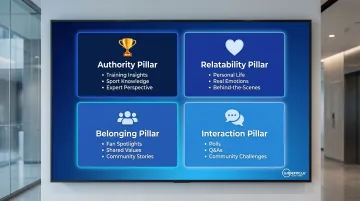
A typical athlete framework uses 3–4 recurring themes:
- Authority pillar — Training insights, performance preparation, sport-specific knowledge
- Relatability pillar — Personal life, behind-the-scenes, real emotions (nerves, recovery, failure)
- Belonging pillar — Fan spotlights, community shoutouts, shared values and causes
- Interaction pillar — Polls, Q&As, challenges, calls to engage
Each pillar serves a distinct function: authority builds credibility, relatability builds connection, and belonging and interaction together create the habit loop that turns casual followers into regulars.
Buffer's consistency research shows that highly consistent posting produces 450% more engagement than inconsistent posting — and 26% more than merely consistent posting. That kind of lift doesn't come from posting more. It comes from posting predictably, around themes that audiences learn to expect and return for.
Map these pillars to a content calendar. Aim for 4–5 posts per week with intentional variety across pillar types.
Step 3: Launch and Sustain with Authentic Content
Community growth begins with authenticity — and the engagement data makes a clear case for it. Athlete accounts generate 3.9% average engagement on Instagram, compared to 1.2% for team accounts and 0.7% for media accounts. The difference isn't production quality. It's personal connection.
Fans follow team accounts for updates, but they follow athlete accounts for the person behind the jersey — and that distinction drives measurably higher engagement.
Content formats that build community:
- Unscripted training clips — real effort, real struggle, real wins
- Pre-competition anxiety or post-competition reflection
- Personal milestone stories (injury recovery, a defining moment, a goal reached)
- Responses to fan questions in video format
- Cause-related posts tied to issues the athlete genuinely cares about
Research from USC Annenberg's "Owning the Narrative" study identified this exact pattern across 33 athlete-owned media ventures — athletes building content ecosystems around personal storytelling, behind-the-scenes training, and social advocacy.
On format: short-form video is where discovery happens. Instagram Reels reach 2.25x more users than static images. YouTube Shorts achieve a 5.91% engagement rate. TikTok video drives 77% higher engagement than photos or carousels on the same platform.
That said, carousels generate 109% more engagement per person reached than Reels — making them valuable for deepening connection with existing followers. Use video to find new community members. Use carousels and stories to keep them engaged once they arrive.
Step 4: Actively Engage to Turn Followers Into Community Members
Posting content is not community building. Community requires two-way interaction.
Buffer analyzed nearly 2 million posts and found that replying to comments boosts Instagram engagement by 21%. That single behavior — responding to what fans say — has measurable algorithmic and relational impact.
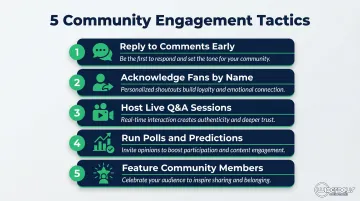
Tactics that convert followers into community members:
- Respond to comments, especially early after posting
- Acknowledge fans by name where possible
- Host live Q&A sessions during off-season or light training periods
- Run polls on training choices, competition predictions, or personal preferences
- Feature community members in content — fan spotlights, shared stories, reposted tags
These tactics work within your existing audience — but reactive community engagement expands reach faster than waiting for followers to find you. Search relevant hashtags and related accounts. Engage genuinely with conversations already happening among your target audience. These are potential community members who just haven't found you yet.
Collaborations accelerate growth. Joint live sessions with fellow athletes, co-created content with aligned brands, and cross-promotions expose your community to new audiences who share the same interests. A single co-hosted live session between two athletes with overlapping fanbases, for instance, can produce follower growth in days that months of solo posting wouldn't match.
What You Need Before Building Your Athlete Community
Preparation determines results — and most athlete communities fail here, before they ever launch.
Platform and Tools Readiness
Minimum requirements before going live:
- Optimized profiles on chosen platforms — consistent branding, clear bio, link to primary destination
- Content scheduling tool to maintain consistency without manual daily effort
- Basic analytics setup from day one — early data captures the baseline you'll need to measure growth
Content and Identity Requirements
Build a 2–4 week content bank before launching. This ensures consistency survives busy competition periods when content creation time drops sharply.
Stock the bank with:
- Training content (clips, photos, process-focused posts)
- Personal story formats (milestones, reflections, behind-the-scenes)
- Fan engagement prompts (questions, polls, calls to share)
Strategy and Support Readiness
Athletes with demanding schedules often can't manage community building alone — and inconsistency is more damaging than not posting at all. A specialized social media partner takes on strategy, content creation, and real-time fan engagement so the athlete stays focused on training.
WideFoc.us works with clients on this kind of full-service model, covering:
- Daily posting across platforms
- Real-time monitoring and fan engagement
- Monthly performance reviews
The goal is simple: the community stays active even when competition season leaves no room for content work.
Key Variables That Drive Athlete Community Growth
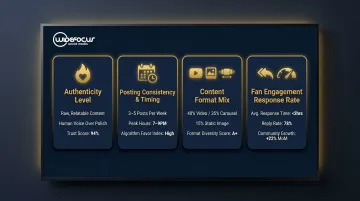
Two athletes with identical follower counts can see completely different community growth trajectories. What separates them comes down to four variables.
Authenticity Level Audiences today recognize manufactured content quickly. Athletes who share real personality, real struggles, and genuine values build emotional bonds — and emotional bonds drive comments, shares, and long-term loyalty. That connection runs especially deep around cause advocacy: athletes who post about issues they genuinely care about attract values-aligned communities that engage more consistently. A USC Race and Equity Center survey found that 94% of professional athletes support using their platforms for activism — making it a mainstream community-building behavior, not a niche one.
Posting Consistency and Timing Irregular posting breaks audience habits and suppresses algorithmic reach. The benchmark across platforms is 3–5 posts per week on Instagram and TikTok, with consistency mattering more than total volume. A steady rhythm of 4–5 posts per week consistently outperforms a burst of 20 posts followed by two weeks of silence.
Content Format Mix Not all formats do the same job. Video drives discovery and new follower acquisition. Carousels and stories sustain engagement with existing followers. Live video builds the strongest real-time community connection. A healthy mix of all three — rather than defaulting to one — serves both growth and retention simultaneously.
Fan Engagement Response Rate Response speed and personalization tell both the algorithm and the audience whether this is an active community or a one-way broadcast. Even engaging with a subset of comments outperforms ignoring them entirely — and athletes who consistently go quiet in their comment sections see engagement drop over time as followers stop bothering.
Common Mistakes That Kill Athlete Communities
Most athlete communities don't collapse overnight. They erode gradually — through predictable, avoidable mistakes. Here are the four that do the most damage:
Posting only game highlights and performance results. Performance-only content treats social media like a scoreboard. Fans want the person behind the athlete. Without off-season or behind-the-scenes content, there's nothing to return for between games — and community decay sets in fast.
Cross-posting identical content to every platform. Instagram, TikTok, Facebook, and X have different norms, formats, and audience expectations. Reposting without adapting tone or format performs poorly everywhere and signals inauthenticity to platform algorithms.
Chasing follower count over engagement quality. Giveaways, follow-for-follow tactics, and viral-bait content attract passive audiences. Accounts with 25%+ suspicious or dormant followers consistently show engagement rates below 1.5%, because the Instagram algorithm tests new posts against a follower batch that doesn't respond, then cuts distribution. A smaller, genuinely engaged audience outperforms a large, disengaged one every time.
Ignoring data until something goes wrong. By the time declining engagement becomes obvious, the community has already started pulling away. Monthly reviews of engagement rate, content performance by type, and audience growth patterns surface problems early enough to actually fix them.
How to Know Your Athlete Community Strategy Is Working
Follower count and impressions are the wrong scorecard. The right indicators:
- Engagement rate — above 1.2% (team average) is the floor; strong athlete accounts run 3–6%
- Comment quality and sentiment — are people writing sentences or just dropping emojis?
- Repeat interaction — are the same community members coming back post after post?
- Voluntary amplification — are followers sharing content and tagging others without being asked?
Run a monthly community health audit:
- Pull top-performing content by engagement rate (not reach)
- Read comment sentiment — depth of response vs. generic reactions
- Check whether the same members are returning and interacting
- Assess audience demographic direction — is growth happening in the right direction?
If the audit reveals a problem, the cause usually falls into one of three categories: content relevance has drifted from what the community values, engagement has become one-sided (posting without responding), or the platform's audience composition has shifted.
Each has a distinct fix. The challenge is that all three look identical on the surface — engagement drops, reach stagnates — so regular data tracking is what separates a quick recovery from months of guesswork.
Frequently Asked Questions
How do you build an engaged community on social media?
Consistent posting around a defined identity, combined with active two-way engagement (responding to comments, hosting Q&As, featuring fans), is the foundation. Authentic content that creates emotional connection reliably outperforms promotional posts in driving real community participation.
What platforms are best for building athlete communities?
It depends on the athlete's audience. Instagram and TikTok work well for younger fans, Facebook for older audiences and parents, YouTube for long-form storytelling, and Strava for endurance sports communities. Start where your audience already is, not where everyone else is posting.
How often should athletes post on social media to grow a community?
Consistency matters more than volume. A sustainable schedule of 4–5 posts per week outperforms sporadic bursts. Plan content in advance, especially for competition periods, so posting rhythm doesn't collapse when training intensity increases.
What content works best for athlete community building?
Behind-the-scenes training content, personal stories, fan Q&As, and cause-related posts consistently outperform game highlight-only content because they build emotional connection. Video formats (Reels, TikToks, Shorts) drive the highest discovery reach.
Should athletes manage their own social media or hire a professional?
Athletes with demanding schedules benefit from professional support for strategy, content planning, and community management. Personal involvement in authentic, unscripted moments remains essential — but consistency and real-time management can be delegated to a trusted team.
How do you measure whether an athlete's social media community is growing in the right direction?
Track engagement rate, comment quality and sentiment, and whether the same audience members return repeatedly. Follower count and impressions measure reach — engagement patterns reveal whether that audience actually cares.