Introduction
Roofing is a hyper-local, trust-based business. Most homeowners research contractors online before ever picking up the phone—and social media is where that trust is built or lost. 75% of consumers always or regularly read online reviews for local businesses before making a decision, and one in three homeowners say social media frequently influences their brand and product choices for home improvement projects.
This guide gives roofing companies a practical roadmap for building a social media presence that generates real leads—from choosing the right platforms to measuring what's actually working.
TLDR:
- Facebook and Instagram are the foundational platforms for reaching homeowner audiences
- Consistent posting (2–3 times per week) builds trust and keeps your brand top-of-mind when storms hit
- Before-and-after project photos, educational tips, and team content drive the highest engagement
- Fast responses to comments, DMs, and reviews build trust with both algorithms and potential customers
- Geo-targeted paid campaigns generate qualified leads faster when paired with consistent organic content
Why Social Media Management Matters for Roofing Companies
Unlike one-time advertising that disappears after the campaign ends, consistent social media management builds cumulative brand equity. Every post, response, and testimonial shared adds to a digital reputation that works around the clock to attract local homeowners.
Roofing customers have unique purchase behavior: they rarely need a roofer until they urgently do. Companies that have stayed visible and built trust on social media are the ones that get called first when a hailstorm hits or a leak appears. Key data points underscore this dynamic:
- About 1 in 3 homeowners say social media frequently influences their brand and product choices
- Nearly 2 home improvement projects per year are started or accelerated because of social content
For roofing companies juggling job sites alongside growing online activity, keeping up with content, reviews, and engagement is a real operational challenge. A dedicated social media partner like WideFoc.us handles that workload end-to-end — from content creation and scheduling to paid campaigns — so visibility converts into actual leads.
Choosing the Right Platforms for Your Roofing Business
Roofing companies don't need to be on every platform—they need to be on the right ones for their audience. Key factors include where your target homeowners spend time, what content format suits your work, and how much capacity you have to manage it.
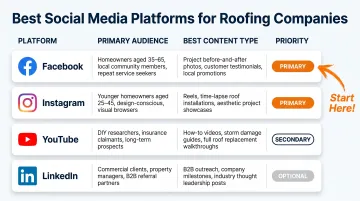
Facebook is the foundational platform for local roofing businesses. 71% of U.S. adults use Facebook, with daily usage strongest among 30–49-year-olds (58%) and 50–64-year-olds (54%)—the age groups most likely to own homes. It supports project photos, reviews, and community group participation, and a Business Page functions as a trust signal when prospects search your company name.
Instagram excels at visual storytelling—before-and-after project photos, short Reels of crews in action, and Stories showcasing your team. While its younger audience (80% of 18–29-year-olds use it) skews below primary homeowner age, Instagram is ideal for building aspirational brand appeal and reaching homeowners planning renovations or upgrades.
YouTube and TikTok
YouTube is the most influential platform for home improvement across all demographics. Educational how-to videos, project walkthroughs, and storm damage explainers rank in Google search results and build credibility over time. TikTok takes the opposite approach: short, unpolished clips of real crews doing real work can build local recognition fast, particularly for roofing companies that aren't afraid to be seen. 37% of U.S. adults use TikTok, with adoption highest among younger audiences.
LinkedIn is where commercial roofing outreach happens—property managers, real estate developers, and general contractors are all active there. Four in five LinkedIn members drive business decisions, making it valuable for B2B growth but secondary for most residential roofers.
Platform Priority Recommendation: Start with Facebook and Instagram, add YouTube once content capacity allows, and use LinkedIn only if commercial clients are a priority.
Building Your Roofing Social Media Strategy
Effective social media management starts with a documented strategy tied to real business goals — not just a posting schedule. Without that foundation, even consistent content rarely moves the needle.
Set Goals That Connect to Business Outcomes
Set specific, measurable social media goals tied to real roofing business objectives:
- Increase website inquiries from social by X% in 90 days
- Grow local followers by Y per month
- Generate Z review requests via social outreach
Track metrics beyond likes: referral traffic, DMs, and call conversions. For a regional HVAC company, WideFoc.us drove a 512% increase in website traffic from Facebook and Instagram, with 9x qualified leads in just eight weeks. Numbers like that come from setting the right targets upfront.
Define Your Target Audience
Build an audience profile for your roofing company:
- Demographics: Age, geography, homeownership status
- Pain points: Storm damage, aging roofs, energy efficiency concerns
- Behavior patterns: When they search, what content they engage with
This profile should inform tone, topics, and platform choices. If your primary customers are Gen X and Boomer homeowners (ages 45–70), Facebook should anchor your strategy.
Build a Content Calendar
Plan posts 2–4 weeks ahead. Align seasonal topics — spring inspections, summer storm prep, fall maintenance, winter ice dams — with your posting schedule. Use scheduling tools like Meta Business Suite or third-party platforms to maintain consistency without daily manual effort. 93% of marketers use automation for scheduling and admin tasks to stay consistent.
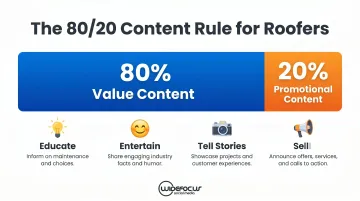
The 80/20 Content Rule: 80% of posts should educate, entertain, or tell stories — not sell. Only about 20% should be explicitly promotional. This balance keeps audiences engaged while still driving real leads.
Content Ideas That Work for Roofing Companies
Not all content works equally well for roofing companies. The formats below consistently drive engagement, build credibility, and turn social followers into booked jobs.
Before-and-After Project Posts
Transformation content is among the highest-performing formats for roofing: homeowners see real work, real results, and immediately start thinking about their own roof. That combination of social proof and visual impact is hard to beat.
Tips for maximum impact:
- Use close-up shots to show material quality and installation detail
- Add brief captions explaining the problem solved (hail damage, aging shingles, leak repair)
- Always get client permission before posting
Educational and How-To Content
Position your company as a trusted local expert by answering common homeowner questions:
- "5 signs your roof needs attention before winter"
- "What to do after storm damage"
- "Asphalt vs. metal shingles: which is right for your home?"
This type of content attracts organic engagement and builds the trust that converts strangers into leads over time. 96% of consumers watch explainer videos to learn about products, making educational content a high-value investment.
Behind-the-Scenes and Team Content
Crew spotlights, job-site videos, team milestones, and company culture posts help homeowners see who they're actually hiring. That personal connection is often what separates your company from a competitor with a similar price.
Practical tips:
- Ask crew members to take 2–3 photos or short clips on every job
- Celebrate team anniversaries, certifications, and safety records
- Share authentic moments without over-polishing the content
51% of consumers say the most memorable brand action on social is providing a response—authenticity and engagement matter more than production value.
Customer Testimonials and Reviews
Leverage positive reviews and customer stories as social content:
- Screenshot and share Google reviews with consistent branded templates
- Ask satisfied customers for short video testimonials
- Reshare user-generated content when customers tag your company
This content serves double duty—it builds trust and gently prompts others to leave their own reviews. 88% of consumers would use a business that responds to all reviews versus 47% for one that does not.
Managing Engagement and Community
Posting content is only half of social media management—the other half is showing up in conversations. Responding to every comment, DM, and review (positive or negative) signals to both the algorithm and potential customers that this is an active, responsive business worth trusting.
69% of consumers expect same-day responses from brands on social, and nearly three-quarters expect replies within 24 hours or sooner. For roofing companies competing on trust and reputation, response speed directly influences conversion rates.
Practical community engagement tactics for roofing:
- Join local neighborhood Facebook groups and offer helpful storm prep tips (without hard selling)
- Respond to questions in comments with genuine expertise, not canned replies
- Acknowledge negative feedback publicly before resolving it privately
Consistency matters across every touchpoint. Whether the tone is conversational or straightforward, each response should sound like it's coming from the same company — because homeowners read your replies just as carefully as your reviews before hiring.
Paid Social and Tracking Performance
When and How to Use Paid Social Ads
Paid social campaigns complement organic content for roofing companies. Facebook and Instagram lead ads can target homeowners within a specific radius by age, homeownership status, and interests. Start with modest budgets to boost high-performing organic posts or run seasonal offers before scaling to dedicated lead generation campaigns.
Average Facebook Lead Ads cost per lead (CPL) for Home & Home Improvement is approximately $24.29, though actual performance varies by market, offer, and creative. Retargeting (running ads to people who have already visited your website or engaged with your posts) targets a high-intent audience far more likely to convert than a cold one.
For a regional home services company, WideFoc.us implemented geo-targeted paid campaigns through Meta, directing high-intent local audiences to the client's website. The result: website traffic from Facebook and Instagram increased by 512%, with 9x qualified customer leads in the first eight weeks.
Metrics That Actually Matter for Roofers
Track social media metrics that connect to business outcomes:
- Reach and impressions show how many local homeowners your content is reaching
- Engagement rate reveals whether your posts are actually resonating with your audience
- Link clicks and website referral traffic signal lead intent from social channels
- Follower growth rate tracks audience momentum over time
- Direct messages and form submissions are your clearest measure of actual lead generation
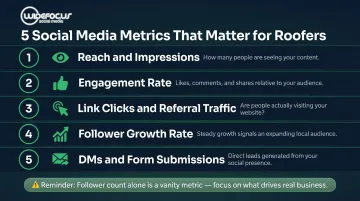
These metrics tell a different story than raw follower count. A roofing company with 500 engaged local followers will typically outperform one with 5,000 disengaged, out-of-market followers — because reach without relevance doesn't generate calls.
Frequently Asked Questions
Which social media platform is best for roofing companies?
Start with Facebook for local reach and credibility among Gen X and Boomer homeowners. Add Instagram for visual project content and Reels. Consider YouTube for educational long-form content as capacity grows.
How often should a roofing company post on social media?
Post at least 2–3 times per week. Consistency matters more than volume — a steady, reliable presence builds more trust with local audiences than occasional content spikes.
What type of content performs best for roofing companies on social media?
Before-and-after project photos, educational tips (like storm prep or maintenance checklists), and behind-the-scenes team content consistently outperform generic posts. They show real work and real people, which is what earns trust from local homeowners.
Should a roofing company manage social media in-house or hire an agency?
Both paths can work. In-house management is viable if someone on the team has real capacity and social media know-how. Agencies like WideFoc.us handle strategy, content, and posting so owners and crews can stay focused on the job site.
How can a roofing company generate leads through social media?
Combine consistent trust-building content, targeted paid ads with clear calls to action (like "Request a Free Inspection"), and prompt engagement with every comment and message. Track website referrals and form fills from social.
How do I know if my roofing company's social media is actually working?
Track website referral traffic from social platforms, inbound DMs and calls attributed to social posts, and engagement rate trends. Follower count is a vanity metric. Inquiries, booked estimates, and call volume are what actually tell you if social media is working.
![Social Media Marketing for Plumbers: An Actionable Guide [2026]](https://file-host.link/website/widefoc-thpoao/assets/blog-images/7d114326-c1c2-4b8d-a12f-756a61ecb41e/1778706227357988_c834c6b423e048638769571c88cc7653/1080.webp)