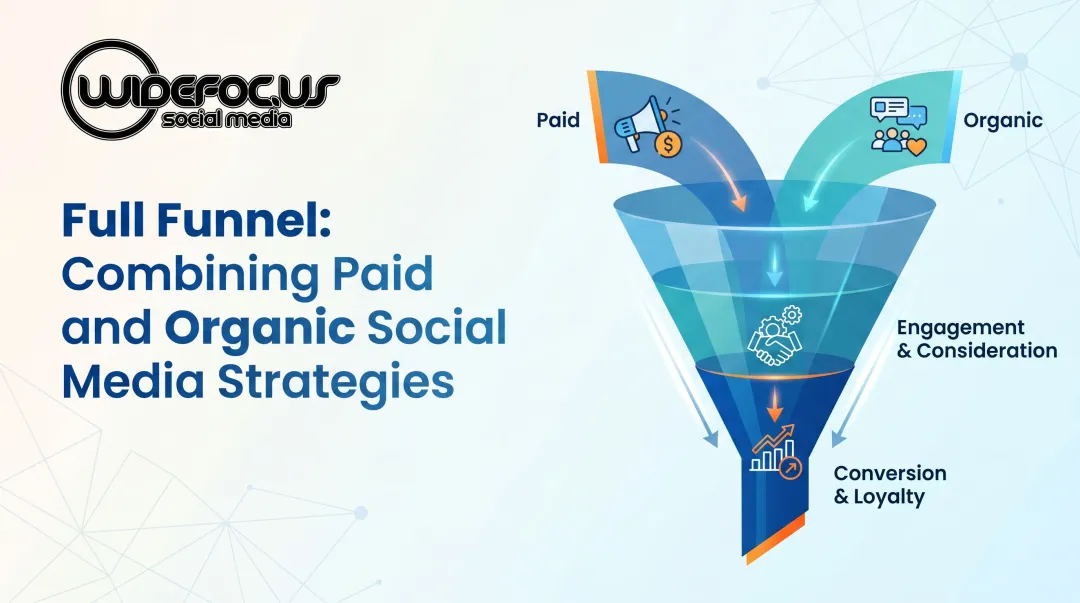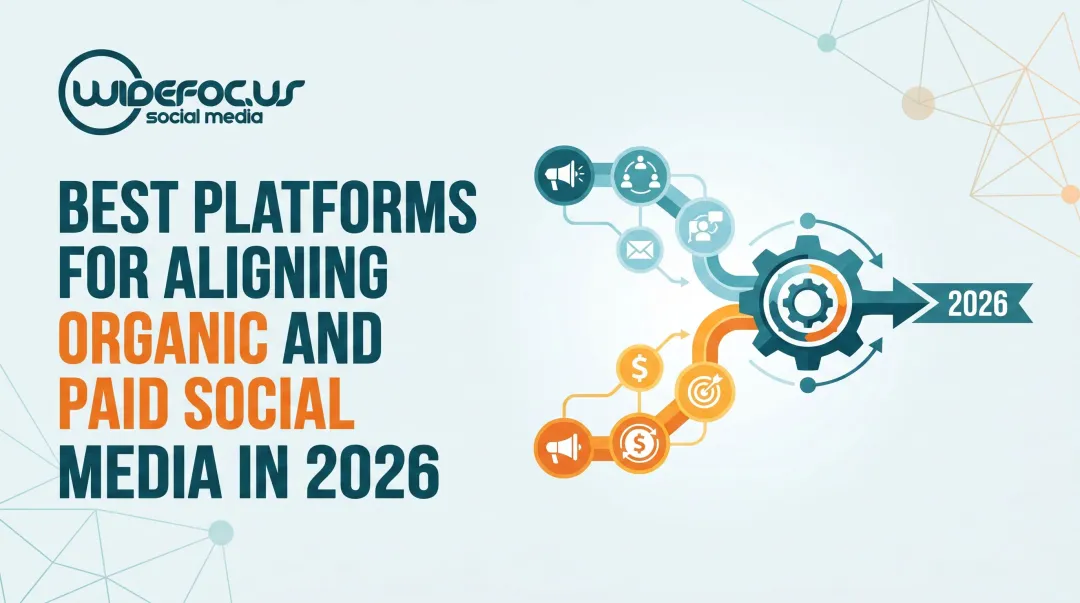
Brands that bet everything on organic are stuck waiting. Brands that run paid without an organic foundation burn through budget and lose credibility. The brands consistently winning on social have figured out that these aren't competing priorities—they're two halves of the same strategy.
This article breaks down exactly how organic and paid social work, when each one is the right tool, and how to integrate both into a strategy that compounds over time.
Key Takeaways
- Organic social builds trust and community over time, though reach is limited and growth is slow
- Paid social drives fast, targeted reach and measurable conversions—with results that disappear the moment the budget runs out
- Neither works as well alone; the strongest social strategies run both in parallel
- Use organic as your foundation and paid as the accelerant, with data from each informing the other
Organic vs. Paid Social Media: A Quick Comparison
Before getting into strategy, here's how the two approaches differ across the dimensions that matter most:
| Dimension | Organic Social | Paid Social |
|---|---|---|
| Cost | Free (time investment only) | Budget-dependent |
| Reach | Algorithm-driven, limited to followers | Audience-targeted, unlimited by spend |
| Speed | Slow, compounds over months | Immediate |
| Targeting | Followers + algorithmic distribution | Custom by demographics, interests, behavior |
| Analytics | Engagement-based (likes, shares, comments) | Conversion-focused (CPC, ROAS, CPL) |
| Best Use | Relationship-building, brand trust | Driving conversions, scaling reach |
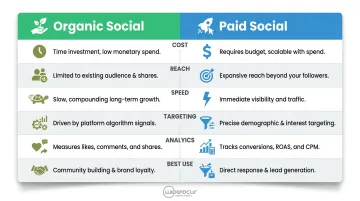
The table above shows two distinct tools — but the strongest social strategies don't choose between them. Organic builds the credibility that makes paid ads land. Paid amplifies the content that organic has already proven resonates. Used together, each channel actively improves the performance of the other.
What Is Organic Social Media?
Organic social covers any content published without paid promotion: posts, stories, videos, Reels, comments, and community interactions that reach audiences through platform algorithms and earned engagement.
It's where brands establish voice and build genuine relationships — credibility that accumulates through consistent, relevant content over time.
Why Organic Still Matters (Despite Declining Reach)
The reach numbers aren't pretty. According to Sprout Social, Facebook pages now reach just 1.1% to 2.2% of their followers per post—a fraction of what was possible a decade ago. Instagram performs better at 7–9%, though even that dropped 12% year-over-year.
Audiences are still engaging — just more selectively. Sprout Social's 2025 Content Benchmarks Report found a 20% year-over-year jump in average inbound engagements, meaning the content that resonates is resonating more deeply than ever.
That deeper engagement ties directly to trust. Research from Stackla/Nosto found consumers are 2.4x more likely to view user-generated and organic content as authentic compared to brand-created ad content — and 79% of consumers say UGC directly influences their purchasing decisions.
Where Organic Works Best
- Building and nurturing an existing audience
- Establishing brand personality and voice
- Customer service and community engagement
- Showcasing company culture and behind-the-scenes content
- Creating evergreen content that continues generating value over time
Platform note: Organic strategy should be tailored by platform. LinkedIn delivers unusually strong organic reach—averaging 5–10% of followers per post—making it a strong channel for B2B thought leadership. Instagram and TikTok favor visual, entertaining content for B2C audiences, with TikTok's median engagement rate sitting at 2.63%, roughly four times higher than Instagram.
What Is Paid Social Media?
Paid social covers any sponsored or promoted content—boosted posts, targeted ad campaigns, lead gen forms, and paid influencer partnerships—where brands pay platforms to reach specific, defined audiences beyond their existing followers.
The core advantage is control. You decide who sees your content, when, and how often. That precision is something organic can never replicate.
Core Benefits of Paid Social
- Precision targeting by demographics, behaviors, interests, and retargeting lists
- Immediate reach to audiences who've never encountered your brand
- Conversion-ready formats with direct CTAs, lead gen forms, and trackable links
- Detailed analytics including cost-per-click, ROAS, and conversion tracking
According to the IAB/PwC Internet Advertising Revenue Report, social media advertising revenue hit $88.8 billion in the U.S. alone in 2024, a 36.7% year-over-year increase that reflects a fundamental change in how brands allocate marketing budgets.
The Sustainability Challenge
Paid results stop the moment spend stops. That alone limits what paid can do as a standalone strategy.
Ad fatigue compounds the problem. Research shows CTRs can drop by 50% after just 5–8 exposures to the same creative, with conversion rates falling roughly 45% after four exposures. For cold audiences, frequency above 3.0 is typically where performance starts to erode.
Paid campaigns don't exist in a vacuum. Users who see an ad, visit a profile, and find no content history will distrust the brand—and the ad spend goes to waste. Credibility has to already exist before the ad does its job.
Where Paid Works Best
- Product or service launches requiring fast visibility
- Time-sensitive promotions or events
- Reaching net-new audience segments
- Retargeting website visitors or previous engagers
- Driving specific, measurable actions: form fills, purchases, demo signups
When Does Each One Win?
The answer depends on where you are and what you need.
Prioritize organic when:
- You're building brand identity from scratch
- Budget is limited and long-term trust matters most
- You're nurturing an existing audience through the consideration phase
- You don't yet know which content resonates with your audience
Prioritize paid when:
- You need fast results against a defined deadline
- You're launching a product and can't wait months to build reach
- You want to reach a specific audience segment you don't have organically
- You have a conversion goal with a measurable window
That said, the two rarely succeed in isolation. Most brands need organic credibility before paid becomes fully effective — ads pointing to a sparse, inconsistent profile erode ad ROI before the campaign even gets traction. Build the organic foundation first, then use paid to scale what's already working.
How to Build a Hybrid Social Media Strategy That Works
Start With Organic as the Foundation
Invest in consistent, audience-first content before scaling paid. Organic posting is also your testing ground—it reveals which topics, formats, and messages actually connect with your audience. That data becomes the blueprint for paid campaigns.
Don't run ads until you have a real organic presence backing them up.
Boost What's Already Working
One of the highest-ROI moves in paid social is putting budget behind organic posts that are already performing well. This "low-risk amplification" approach works because the content has already proven its appeal—you're not guessing at creative.
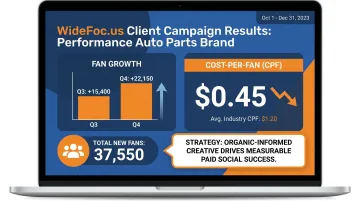
WideFoc.us applies exactly this approach for clients. For one performance auto parts brand, the team analyzed the company's top-performing organic content, built paid campaigns around those proven creatives, and used lookalike audiences to extend reach—adding more than 9,000 fans at just $0.05 cost-per-fan, well below the industry benchmark of $1.00.
Use Organic Insights to Sharpen Paid Targeting
Organic analytics tell you who engages with your brand, what content they prefer, and when they're most active. That information directly informs paid audience targeting, creative direction, and messaging.
When WideFoc.us noticed that organic Pinterest posts generated a 337% engagement surge for one client compared to other platforms, the team proactively recommended shifting paid budget to Pinterest. The resulting campaigns delivered 700,000+ impressions and 8,000+ clicks at $0.10 per click.
The signal came from organic. The scale came from paid.
Maintain Brand Cohesion Across Both Channels
When organic and paid teams operate in silos, inconsistent messaging is the predictable result. Users moving between an organic post and a paid ad from the same brand should feel continuity—not confusion.
Keep both channels coordinated across:
- Visuals and brand voice (consistent look, feel, and tone)
- Campaign messaging (same core narrative, not conflicting angles)
- Creative asset timing (launches and promotions aligned, not accidental)
Measure Both Channels Together
Fragmented reporting prevents brands from seeing true social ROI. A user might discover a brand through an organic post, get retargeted with a paid ad three days later, and convert. Evaluating those touchpoints in isolation misses the full picture.
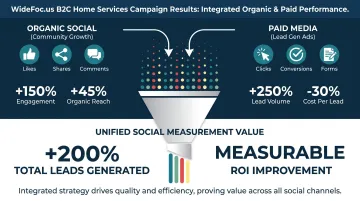
Tracking organic engagement alongside paid conversion data shows how each channel influences the customer journey. For a B2C home services client, WideFoc.us's integrated organic and paid approach delivered a 512% increase in form fills and 9x qualified leads over baseline. That result only shows up when you're measuring the whole picture.
Conclusion
Organic and paid social media aren't competing priorities — they're complementary tools. Organic builds trust and community. Paid accelerates reach and drives conversions. Each makes the other more effective: organic gives paid ads credibility to land on, and paid extends the content that organic has already proven works.
The brands treating these as either/or choices are leaving results on the table.
If you're ready to stop guessing and build a strategy that combines both approaches, WideFoc.us is a full-service social media agency with nearly 20 years of experience helping B2B and B2C brands develop customized, measurable social media strategies built around their specific goals. Reach out at info@widefoc.us or call 303.219.0453 to start the conversation.
Frequently Asked Questions
What is the difference between organic and paid social media strategies?
Organic social is free, algorithm-driven content focused on building relationships and brand trust over time. Paid social is budget-driven advertising with precise audience targeting and immediate results. The core difference comes down to cost, control, and timeline—organic is slower but builds lasting credibility, paid is faster but stops when spend stops.
How do organic and paid social media strategies work together?
Organic content establishes brand trust and generates audience insights, while paid amplifies proven content and reaches new audiences. The relationship flows both ways: organic performance data informs paid targeting, and paid results reveal which messages resonate enough to invest in organically.
What is a paid social strategy?
A paid social strategy is a structured plan for using sponsored content, targeted ads, and boosted posts to reach defined audiences on social platforms. The goal is to drive specific, measurable actions—clicks, leads, purchases—within a defined budget and timeline.
Is $10 a day enough for Facebook ads?
A $10/day budget can work for small, targeted campaigns—local businesses and boosted awareness posts especially—but results depend heavily on audience size, objective, and creative quality. Facebook's algorithm needs roughly 50 conversions per week per ad set to optimize fully, which typically requires a larger daily spend to exit the learning phase.
What is the 5-5-5 rule on social media?
The 5-5-5 rule circulates informally online but lacks a standardized definition or authoritative source—versions vary widely across marketing blogs. More reliable frameworks include the 80/20 rule (80% value-driven content, 20% promotional) and the Rule of Thirds (one-third brand promotion, one-third shared content, one-third direct audience engagement).