![Social Media Marketing for Plumbers: An Actionable Guide [2026]](https://file-host.link/website/widefoc-thpoao/assets/blog-images/7d114326-c1c2-4b8d-a12f-756a61ecb41e/1778706227357988_c834c6b423e048638769571c88cc7653/360.webp)
Introduction
Most plumbing businesses deliver exceptional work — fixing emergency leaks at 2 a.m., replacing corroded pipes, and keeping homes running. Yet many remain invisible online, and that gap costs them leads every day. While competitors with active Facebook pages and Instagram accounts fill their schedules, plumbers without a digital presence watch potential customers scroll right past.
98% of consumers use the internet to find information about local businesses, and over 55% search before booking a home services appointment.
Social media has become a primary research channel in that process: 34% of consumers now use Instagram and 23% use TikTok as alternative local business review platforms. For plumbers, showing up digitally is no longer optional — a consistent social presence is what separates a full schedule from empty time slots.
This guide covers why social media matters for plumbers, which platforms to focus on, how to build a strategy from scratch, what to post, and best practices to turn followers into booked jobs.
TLDR:
- Social media builds trust before customers call — 70% of homeowners pay more for pros with better reputations
- Facebook is the best starting point for local ad targeting and reach
- Facebook ads average $25–$60 per lead vs. $66+ on Google — lower cost, comparable results
- Post 3 times per week minimum with before-and-after photos, how-to videos, and customer testimonials
- Respond to comments and messages within 24 hours — 73% of users will buy from a competitor if you don't
Why Social Media Marketing Matters for Plumbing Businesses
In the trades, trust drives every purchasing decision. Homeowners invite plumbers into their homes to fix problems they can't see or understand, often spending hundreds or thousands of dollars based solely on reputation. Social media is one of the fastest ways to build that trust before a potential customer ever picks up the phone.
A consistent presence signals that a business is active, professional, and invested in the community — details that matter when someone needs a plumber at 6 p.m. on a Friday.
The numbers back this up: 70% of homeowners would pay more for a pro with a better service reputation, and 97% say response speed and transparent pricing influence which pro they hire. Social media provides the platform to demonstrate both. When plumbers share customer reviews, post project updates, and respond quickly to messages, they build the credibility that converts browsers into bookers. 88% of consumers would use a business that responds to all of its reviews, compared to only 47% who would use a business that ignores feedback entirely.
Cost and Targeting Advantages Over Traditional Advertising
Social media marketing delivers better ROI than traditional advertising channels for most plumbing businesses. Print ads, radio spots, and direct mail require large upfront investments with limited targeting — you pay to reach everyone in a geographic area, whether they own a home or rent an apartment, whether they need plumbing work this month or next year.
Facebook and Instagram ads flip that model. Plumbers can target specific zip codes, homeowner demographics, age ranges, and household income levels with budgets as low as $5 per day.
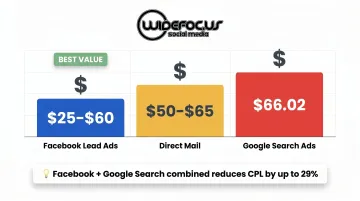
The cost difference is substantial. Facebook Lead Ads average $1.92 cost-per-click vs. $5.26 on Google Ads, a 63% gap. For home services specifically, CPL benchmarks by channel break down like this:
- Facebook lead forms: $25–$60 per lead
- Direct mail: $50–$65 per lead
- Search ads: $66.02 per lead on average
Plumbers running Facebook and search ads together cut their CPL by up to 29%, because social media warms up cold audiences before they search for emergency services.
The Compounding Effect
Social media marketing compounds over time. Each post, review share, and community interaction adds to a plumber's digital reputation, making it easier to appear in local searches, word-of-mouth recommendations, and platform algorithms. When someone searches "plumber near me" on Facebook or Instagram, businesses with active profiles and positive engagement rank higher. When neighbors ask for referrals in local Facebook groups or on Nextdoor, plumbers with established social proof get tagged.
This compounding effect means that the effort invested today — posting a before-and-after photo, responding to a comment, sharing a maintenance tip — continues delivering value months later as the content resurfaces in feeds, gets shared, and builds authority.
Which Social Media Platforms Should Plumbers Use?
Not all social media platforms deliver equal value for plumbing businesses. Each platform attracts different audiences and supports different content types, so plumbers must choose strategically rather than spreading resources too thin.
Platform Comparison:
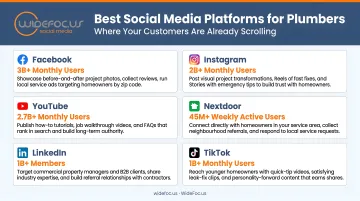
Facebook — 71% of U.S. adults use Facebook, with 80% of adults aged 30–49 active daily. Local ad targeting, reviews, community groups, and direct messaging make it the strongest starting platform for residential plumbers.
Instagram — Used by 50% of U.S. adults, Instagram is built for visual storytelling. Before-and-after photos and Reels (averaging 3.1% engagement) reach younger first-time homeowners — 80% of 18–29-year-olds are on the platform.
YouTube — 84% of U.S. adults use YouTube, making it the most widely used platform overall. How-to videos — fixing a running toilet, winterizing outdoor faucets — rank in Google search and drive organic traffic long after posting.
LinkedIn — Used by 25% of U.S. adults, LinkedIn suits plumbers targeting commercial clients and property managers. It's largely irrelevant for residential work but worth it for B2B referrals and service contracts.
Nextdoor — Nextdoor reaches nearly one in three U.S. households. Users are 75% more likely to hire a neighbor-recommended provider, and they actively seek home service referrals — making this a high-intent platform for local plumbers.
TikTok — 37% of U.S. adults use TikTok, with 50% of under-30s on it daily. Plumbing ranks in the top 3 most-viewed trades on the platform at 341.2 million views — short videos on unusual repairs or common myths perform well with younger homeowners.
Start with One or Two Platforms
Trying to maintain a presence on every platform leads to inconsistent posting and poor results. Start where your ideal customers are most active, get consistent, and expand from there.
For most residential plumbers, Facebook and Instagram are the natural first choice. Facebook covers the broadest homeowner audience with precise ad targeting; Instagram builds visual credibility through project photos and Reels. Once those run consistently, YouTube adds long-term value — how-to videos keep generating search traffic for months without additional effort.
How to Build a Social Media Strategy for Your Plumbing Business
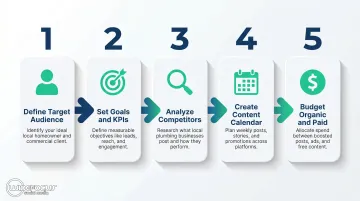
A successful social media presence requires strategy, not just sporadic posting. Follow these five steps to build a sustainable plan.
Step 1: Define Your Target Audience
Start by identifying who you're trying to reach. Review your existing customer data, job history, and service booking patterns to determine your most profitable customer segments:
- Homeowners (age range, household income, property type)
- Property managers (apartment complexes, rental properties)
- Commercial facilities managers (office buildings, retail centers)
- DIY homeowners (seeking advice before calling a pro)
This audience definition determines platform choice, content tone, and ad targeting. A plumber serving luxury homes will use different messaging than one focused on rental property emergency repairs.
Step 2: Set Specific, Measurable Goals and KPIs
Vague goals like "get more followers" lead to inconsistent effort and unclear results. Instead, define business goals and the KPIs used to measure them:
Business Goals:
- Increase booked jobs from social media by 20% in 90 days
- Generate 15 qualified leads per month from Facebook ads
- Achieve 100+ positive reviews shared across social platforms in six months
- Build brand awareness in three new zip codes within service area
KPIs to Track:
- Follower growth rate
- Post reach and impressions
- Engagement rate (likes, comments, shares per post)
- Click-through rate to website
- Direct message inquiries
- Lead form submissions
- Cost per lead (for paid campaigns)
Clear KPIs make it possible to measure what's working and adjust tactics accordingly.
Step 3: Analyze Local Competitors
Look at what other plumbing businesses in your area are posting and which content types earn the most engagement. The goal isn't to copy competitors — it's to find gaps they're missing and own that space.
Check:
- Which platforms do they prioritize?
- What content types perform best (photos, videos, reviews)?
- How quickly do they respond to comments and messages?
- What services do they highlight most frequently?
- Are there gaps in content (seasonal tips, behind-the-scenes, team spotlights)?
If every competitor posts completed job photos but none offer seasonal maintenance tips, that gap is your opening.
Step 4: Create a Content Calendar
Consistency separates successful plumbing social media accounts from dormant ones. A content calendar ensures you post regularly rather than scrambling for ideas at the last minute.
What a basic content calendar includes:
- Platform (Facebook, Instagram, etc.)
- Date and time
- Content type (photo, video, text post, Story)
- Caption or copy notes
- Links or hashtags
- Status (draft, scheduled, published)
Start with three posts per week and build from there. Use scheduling tools like Meta Business Suite (free for Facebook and Instagram), Hootsuite, or Buffer to batch content creation and automate posting.
Step 5: Budget for Both Organic and Paid
Organic content builds long-term trust while paid ads drive short-term reach and lead generation. Both work best together rather than as substitutes.
For plumbers with limited budgets, starting with $5–$20 per day on Facebook or Instagram ads can meaningfully extend local visibility. At a $500/month budget with a home services cost per lead of $25–$60, a plumbing business could reasonably generate 8–20 leads per month through Facebook Lead Ads — a far lower cost than search ads or direct mail.
Target ads by zip code, homeowner demographics, and age range to keep budget focused on qualified prospects within your service area.
What to Post: Social Media Content Ideas for Plumbers
Five content types consistently outperform everything else for plumbing businesses on social media — and each one serves a different stage of the customer decision process. Focus on these five high-performing content types.
Before-and-After Project Photos and Videos
Before-and-after content works because it proves competence without saying a word. A clogged drain cleared, a corroded pipe replaced, or a full bathroom replumb documented in side-by-side format shows your skill faster than any caption could.
Tips for before-and-after content:
- Capture wide shots showing the full scope of work
- Use good lighting to highlight the difference
- Include brief captions explaining the problem, solution, and outcome
- Always obtain customer permission before posting photos of their property
How-To and DIY Tutorial Videos
Posting DIY tips feels risky — will it cost you jobs? In practice, it does the opposite. Videos on how to fix a running toilet, winterize outdoor faucets, or clear a minor clog build authority and organic search visibility. 96% of people have watched an explainer video to learn more about a product or service, and 85% say they've been convinced to buy after watching one.
Format matters. Short clips (30 seconds to 2 minutes) perform best on Instagram Reels and TikTok; longer explainers (5–10 minutes) belong on YouTube. When a homeowner's problem turns out to be bigger than a DIY fix, your video is the reason they already trust you.
Customer Reviews and Testimonials
Sharing positive reviews as social media posts serves as powerful social proof. 70% of consumers are influenced by social media when making purchasing decisions, and testimonials from satisfied customers build trust faster than promotional content.
How to leverage reviews:
- Ask customers for reviews immediately after completing a job (73% of homeowners say they would refer a pro after an excellent experience)
- Create graphics featuring 5-star reviews with customer names and neighborhoods
- Record short video testimonials on-site with customer permission
- Share screenshots of positive Google or Facebook reviews to your social feed
Behind-the-Scenes and Team Content
Photos or short videos of techs on the job, team milestones, or even humorous moments on-site make your business feel real and recognizable — the kind of company people actually want to call. Followers who know your team by name are far more likely to become repeat customers.
Ideas for behind-the-scenes content:
- Introduce team members with quick profile posts
- Show techs arriving at job sites in branded trucks
- Celebrate work anniversaries, certifications, or team achievements
- Share "day in the life" Stories or Reels
Seasonal and Community-Relevant Content
Connecting content to local events, seasons, and community involvement builds familiarity over time. When neighbors see your business showing up consistently — online and in the community — you become the name they remember when something breaks.
Seasonal content ideas:
- Winter: Pipe burst prevention tips, frozen pipe emergency services
- Spring: Drain maintenance, sump pump checks before rainy season
- Summer: Outdoor faucet repairs, sprinkler system inspections
- Fall: Water heater maintenance before cold weather
Community content ideas:
- Sponsoring a local Little League team
- Participating in neighborhood cleanups or charity events
- Highlighting local landmarks or events in your service area
Social Media Best Practices for Plumbing Contractors
Following best practices ensures your social media efforts deliver consistent results rather than sporadic engagement.
Post Consistently and Maintain a Cohesive Brand Voice
Irregular posting erodes the trust signals that algorithms and audiences rely on. Research shows 6–7 high-quality posts per week is the engagement sweet spot — two excellent posts per week generate more engagement than 20 pieces of mediocre content.
For small plumbing businesses, start with 3 posts per week on your primary platform and post every other day minimum. The tone across platforms should feel consistent — whether that's friendly and neighborly, professional and expert, or a mix — and visual elements (logo, colors, photo quality) should be uniform across all profiles.
Engage Actively with Comments and Messages
Social media is a two-way channel. Customers expect fast responses — and the data backs that up:
- 79% expect a reply within 24 hours
- 73% say they'll buy from a competitor if a brand ignores them on social
Responding to comments, answering DMs, and acknowledging reviews — positive and negative — shows the responsiveness homeowners want before letting someone into their home. Set aside 15–20 minutes daily for engagement rather than monitoring in real time.
Use Hashtags and Location Tags Strategically
Use a mix of local hashtags (city or neighborhood + service type), industry hashtags, and trending tags to increase discoverability. Location tags on posts and Stories significantly increase visibility among local users who may not yet follow your account.
Example hashtag mix for a Denver plumber:
- Local: #DenverPlumber #PlumberDenver #DenverCO
- Service-specific: #EmergencyPlumbing #PlumbingRepair #WaterHeaterRepair
- Broader: #HomeRepair #HomeServices #Homeowner
Aim for 5–10 hashtags per post on Instagram; 2–3 on Facebook.
Run Targeted Paid Ads Alongside Your Organic Content
Boost top-performing organic posts or run dedicated Facebook/Instagram campaigns using zip code targeting and homeowner demographic filters. This puts your best content in front of qualified local prospects who haven't found you yet.
Organic content builds trust over time. Paid ads accelerate reach. Together, they work better than either does alone — and a monthly budget of $300–$500 generates consistent inbound leads when targeted by service area and homeowner demographics.
Tools to Streamline Your Plumbing Social Media Marketing
The right tools reduce the time and complexity of managing social media consistently.
Scheduling and Management Tools
Scheduling posts in advance saves time, ensures consistency, and allows plumbers to batch content creation rather than scrambling daily.
- Meta Business Suite — Free, native to Facebook and Instagram. Core features include post scheduling, inbox management, basic analytics, and ad management for both platforms.
- Hootsuite — Plans start at $99/user/month. Includes 10 social accounts, unlimited post scheduling, best-time-to-post recommendations, AI assistant, unified inbox, and Canva integration.
- Buffer — Free plan supports up to 3 channels and 10 scheduled posts per channel. Essentials plan costs $5/month per channel and includes unlimited scheduled posts and advanced analytics.
Design and Content Creation Tools
Canva is an accessible, low-cost tool for creating branded graphics, review cards, seasonal promotional posts, and before-and-after image layouts — no design skills required.
The free plan includes templates and a drag-and-drop editor. Canva Pro starts at $15/month and adds premium templates plus access to over 100 million photos, graphics, and media assets.
Analytics and Performance Tracking
Once you're posting consistently, built-in platform analytics show you what's working. Each major platform includes its own reporting tools:
- Facebook Insights — tracks reach, engagement, and page performance
- Instagram Insights — shows post reach, follower activity, and story metrics
- YouTube Studio — monitors video views, watch time, and subscriber trends
Review these monthly to refine your content mix and identify what drives leads.
For plumbers who want a professional team managing performance analysis, content, and campaigns end-to-end, WideFoc.us handles the full strategy and execution — from content to campaigns to performance reporting. The agency has delivered measurable results for home services businesses, including a 512% increase in form fills and 9x qualified leads for a regional HVAC company in just eight weeks.
Frequently Asked Questions
What is the best social media platform for a plumbing business?
Facebook is the strongest starting point for most plumbers due to its large homeowner user base (80% of adults aged 30–49 use it) and powerful local ad targeting. Instagram adds value for visual before-and-after content, while YouTube builds long-term authority through how-to videos that rank in search.
How often should plumbers post on social media?
Start with 3 posts per week on your primary platform. Consistency matters more than frequency — quality content on a predictable schedule outperforms sporadic bursts of activity. Once you've established a rhythm, aim for 6–7 posts per week total across platforms.
Do plumbers need paid ads or is organic posting enough?
Organic content builds long-term trust and brand awareness, while paid ads accelerate local reach and lead generation. Ideally both are used together — even a modest $300–$500/month budget makes a measurable difference when targeted by zip code and homeowner demographics.
How do I get more followers on social media as a plumber?
A few proven tactics:
- Post at least 3 times per week and use local hashtags and location tags on every post
- Engage with followers and participate in local community groups
- Ask satisfied customers to follow and share your page
- Run occasional paid follower-growth ads to expand your audience within your service area
How can I measure whether my social media marketing is working?
Track platform analytics (reach, engagement rate, profile visits, link clicks) alongside business outcomes: DM inquiries, website traffic from social, and new customers. For paid campaigns, monitor cost per lead and compare conversion rates against your other channels.
Should I hire a social media agency for my plumbing business?
Hiring a social media agency makes sense when you lack the time, expertise, or consistency to manage it in-house. WideFoc.us has helped businesses in trade industries build consistent, results-driven social media presences — freeing owners to focus on the work itself.